‘A book is proof that humans
are capable of working magic.’
Carl Sagan
This room is my favourite. I love all my stories, new and old, good and bad, long and short, but there is just something about a novel, a story exceeding a hundred thousand words, where you get to know the characters intimately, where you get lost in the world.
In the late 90s there was this police show, Homicide, Life on the Street, about the detectives of the Homicide Unit in Baltimore, Maryland, in the United States. I never missed an episode and it had a significant influence on me when I started thinking about writing crime. Rather than tying myself to a single series character, I wanted to work with a group of characters. When I began my research into the South African situation, I found my answer at the Serious Violent Crimes Unit in Bishop Lavis, Cape Town. The detectives were divided into four groups. Most of my books deal with crimes being investigated by detectives from one specific group. Currently, there are ten detectives in the group, led by Captain Fundile Lubambo.
Unfortunately, like many of the South African Police Service’s specialist units, SVC has since been disbanded. From the start, my aim was to write realististic crime fiction—realistic criminals, realistic detectives and realistic police procedures—like the true crime books I love so much. My one exception is SVC, which lives on in my books. Because it is the perfect unit for my interests. Violent crime. Murder police.
‘[A homicide detective is] entrusted with the pursuit
of that most extraordinary of crimes:
the theft of a human life.
You speak for the dead.’
David Simon, Homicide, A Year on the Killing Streets

Guilty
Published by Penguin, 2026
The idea for Guilty remains a favourite. A middle-
The scene just appeared in my mind, along with the reason why it was happening. The whole story was more or less there, which is not the way it usually goes. Short stories, yes, but not novels. My novels usually start from a crime or killer I read about and find interesting. Or I meet someone in die police with a fascinating function, like a hostage negotiator. And although I do a lot of research beforehand, I don’t plot—the story tends to unfold as I write, often taking unexpected turns and detours. But Guilty was like a colouring book: everything was there, I just had to add colour and details.
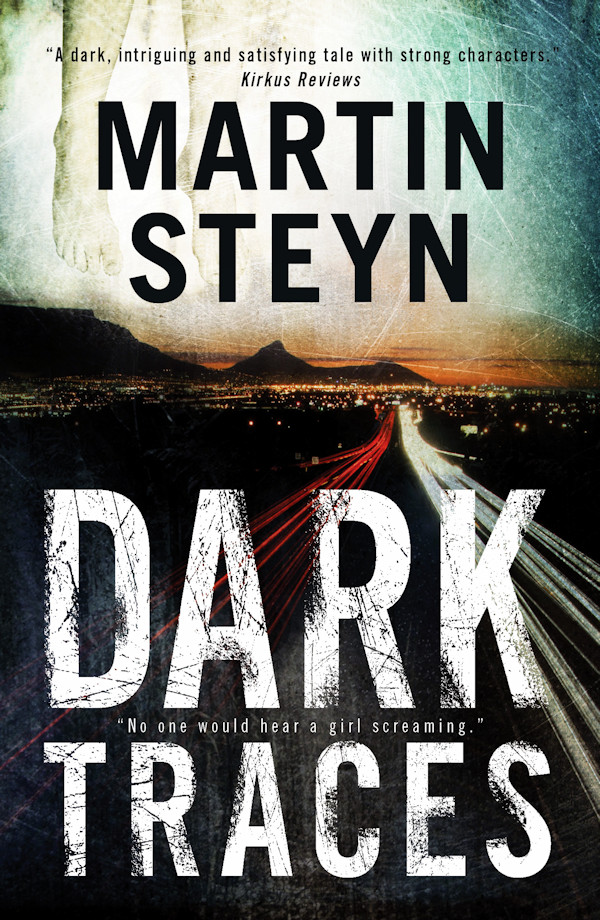
Dark Traces
Published by LAPA, 2017 (South Africa)
Catalyst Press, 2017 (USA)
Naturally, Dark Traces, in its original Afrikaans guise as Donker Spoor, has a very special place in my heart, because it was the first one. Not the first manuscript, but the first one to be published. To become a book. I remember that moment when I opened the box and held that first copy in my hands like yesterday …
Okay. I’m back. My ideas always begin with the crime. With Dark Traces it was an actual series of murders. I read an article about it on Crime Library and then got hold of the book that was written about the case. It’s probably rather disturbing to get excited about such things, but the case fascinated me and I wanted to write my own story about it. The personality and fantasy of the killer in Dark Traces largely resemble the actual murderer's (although he didn’t hang his victims). The stories, though, are quite different.
And then, of course, there’s Mags. Mags and I plodded along for years before we finally managed to get him in print. In fact, there was a point where I’d pretty much given up on him, but like any good murder detective Mags refused to let go.